
bigger than life
inflammation, biohacking, and america's unholy anorexia

I recently returned from a trip to Palermo, Sicily’s capital city and perhaps one of the great places in the world to eat and drink. It was a beautiful week for many reasons, but there was one small yet crucial factor that made it so beautiful: I didn’t see a single advertisement for a GLP-1, protein-boosted product, or boutique work-out class. I don’t know enough about body image in Italy to make a broad claim about this, but I can certainly say that I witness an ad for at least one — if not all — of those things every single day of my life in New York City. It is ambiently exhausting at best, sinister at worst, to be constantly confronted with the physical manifestations of other people’s health neuroses, and it was refreshing to spend a week away from that visual noise.
The recent obsession with ‘biohacking’ is probably borne out of a very real need to address the failures of the American healthcare system, and I am sympathetic to that. When you’re experiencing chronic pain, getting the help you need from traditional medicine can be frustrating, especially for women and gender nonconforming people. I myself went through an entire colonoscopy/endoscopy procedure at the age of 23 and still received no answers or solutions for my life-long debilitating stomach issues. I couldn’t even afford the bill, which wasn’t covered by my unemployment insurance at the time, and so it was sent to collections. It is extremely natural, even logical, for an American to seek health wisdom elsewhere, in the form of homeopathy, acupuncture, or herbalism. My problem with the recent trend toward health optimization is that it is so transparently not about one’s holistic health — it’s about getting smaller, thinner, tauter, and thus purer.
Fasting and denying oneself as a practice is nothing new; it’s still a common ceremonial ritual in all three abrahamic religions. The canon of Catholic saints has a particularly robust history with what has since been termed holy anorexia, in which future (usually female) saints claimed to survive on the eucharist alone while wasting away and eventually succumbing to starvation. The French philosopher and Christian mystic Simone Weil met this same end only a century ago while on an allegedly politically-motivated hunger strike. I suppose what I find so disturbing about the modern proliferation of self-denial is that it’s totally secular. The body itself becomes the religion, the optimization of which becomes the sole sense of ritual and meaning in the devotee’s life. We could argue all day about why Catherine of Siena refused food and induced herself to vomit, but the motivations for many American’s recent slim-down efforts seem totally earthly.
It makes sense, perversely. In recent decades, there have been less opportunities for communion and more time to spend agonizing over one’s interior life. The rise of therapy (a good thing, mostly) and social media combined with a pandemic that aggravated antisocial behaviors are all factors that help explain why everyone seems so obsessed with the Self. Looking inward is not a bad thing, as long as you’re still occasionally looking outward, but in the United States at least it often feels like no one is. After all, if you look outward you will naturally be confronted by the sheer mass of human suffering and humiliation occurring every day on both the micro and macro levels. It’s nauseating, and on an individual basis there is very little we can do about it. Rather than do the hard work of coalition-building, many of us choose to navel gaze. And if you spend enough time navel gazing, you’re going to fall into yourself.
We inherit a lot of this hyper-individualist thinking from the ’80s, a decade that represents a sharp turn back into religious, economic, and social conservatism after a period of progressive change that followed World War II, when many marginalized groups emphasized the need for solidarity rather than bootstrapping. Adding to this confluence of factors was one of the direst public health crises in American history, the AIDS epidemic, which peaked during the Reagan presidency. It was a terrible time to be anything other than svelte, Anglo-Saxon, corporate, and heterosexual. While the United States government fueled a sinister misinformation campaign about the spread of AIDS (while, of course, refusing to do anything constructive to combat it), citizens took it upon themselves to turn their bodies into hermetically-sealed chambers via aerobics, home workouts, strict diets, and compulsive gym-going.
In many ways it feels like we never actually left this ethos behind. The period of perhaps willfully ignorant optimism that defined the Obama era allowed for a brief charade of body positivity and intersectional politics as mainstream beliefs. You could solely blame the first Trump presidency for the swing back, but I think the pandemic did as much if not more damage to the body positivity movement. Like the ’80s before it, the 2020s brought health and conspiracy together into an unholy marriage now called ‘conspirituality’, as coined by researchers Charlotte Ward and David Voas in 2009. So we have a country that is a) obsessed with normalcy and standardization; b) deeply unhealthy both spiritually and physically, with some of the worst nutrition habits and food regulations in the world; c) increasingly secularized; d) prone to conspiratorial thinking; and e) terrified of imminent apocalypse. No wonder everyone wants to disappear.

I have been thinking about this a lot lately because of a recent personal essay published in The Cut, in which the writer bemoans the loss of a friendship due to undisclosed GLP-1 usage. Obviously, on one hand, it’s none of my business, and there are a lot of reasons that someone would use a weight loss drug. The Cut is very good at finding writers willing to become the internet’s lolcow for a day, and their essays are often intentionally inflammatory and/or written by people with humiliation kinks. But the resulting pile-on actually made me really sad, because I think it’s completely natural to feel triggered by the recent no-holds-barred embracing of weight loss, even if I would never write that essay or single out a specific person in my life. I have been in recovery for many years, but I still feel like I’m waging a psychic battle every time I step onto the subway. Maybe that’s embarrassing to admit, but I don’t think I’m the only one experiencing this. Luckily, I have done a lot of work to get to a point in my life where I value pleasure, and that means eating delicious food. There is basically nothing in the world that could make me cede that ground ever again.
I'm not a nutritionist, so I’m not qualified to give scientific health advice. But after many rounds of outpatient therapy and even a stint of having my own dietitian, I do, however, feel qualified to recognize disordered eating and exercise patterns. It’s as if the precariousness of life in the United States has motivated more and more people to optimize their body as inoculation against the apocalypse, as if you can outrun or out-lift whatever finally does us in. I can’t tell you for certain whether or not your seed oil-free diet is lengthening your life. But what I can tell you is that you will, without a doubt, die. And how long you have on this earth is really beyond your control, despite all of your best efforts. This is a terrifying thought; in fact, it’s the terrifying thought, the conundrum that has driven so much of our actions throughout all of human history. You could live the most ascetic life of all time and still be struck by a car tomorrow. Or, in a more likely circumstance, you could develop a life-threatening illness like cancer, most variations of which have nothing to do with how much protein you eat or how early you go to bed.

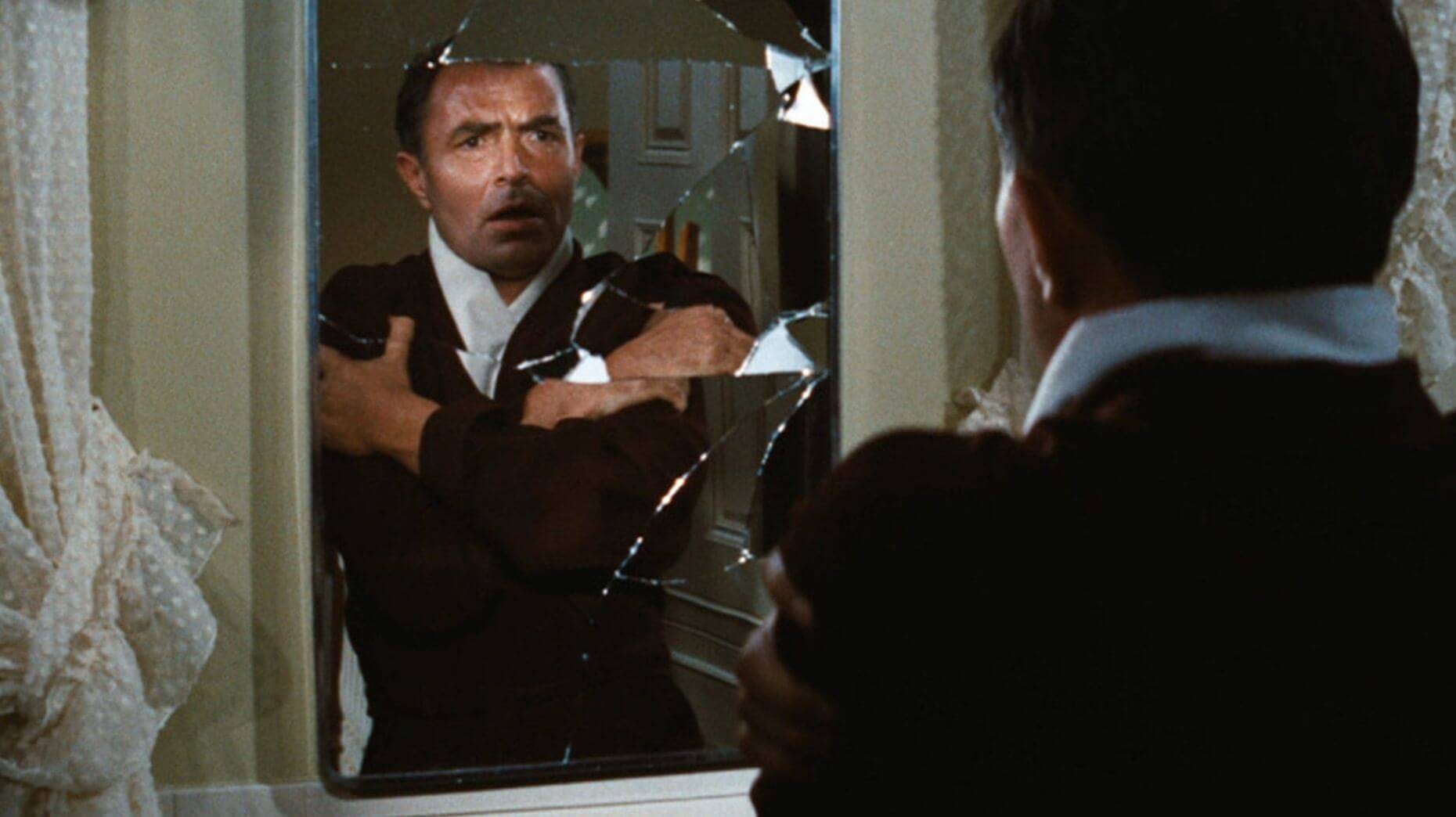
While watching Nicholas Ray’s 1956 melodrama Bigger Than Life, I almost couldn’t believe my ears when James Mason’s character Ed Avery was diagnosed with inflammation, one of the great health buzz-words of our time. I can’t scroll Twitter without seeing some algorithmically-promoted thread about low-inflammation diets, and my YouTube suggestions are filled with shorts about eating to reduce puffiness. I could pretend all of this stems from engaging with other cooking videos, but in reality I am always a little interested in what these self-proclaimed internet health experts might say. Of course I’m tired all the time. And when I look in the mirror my cheeks do look puffy occasionally. It’s an attractive suggestion that all of this stems from one word, the same diagnosis given to Avery seventy years ago.
The film’s anti-hero protagonist Avery is a typical schoolteacher with a wife and young child, portrayed by Mason with his typical uncanny urbanity. After falling ill partially due to increased financial stress, Avery is told that his arteries are inflamed, and only the steroid cortisone can save him. Initially the treatment seems like a miracle drug, and he regains his energy and enthusiasm for life. But taking the cortisone also encourages Avery to become obsessed with physical fitness to the point of abusing the medication, which causes mood swings and violent outbursts. Not only does his new behavior alienate him from his friends and coworkers, but it also seriously endangers his wife and child, culminating in an aborted murder-suicide plot. The film ends ambivalently, with Avery making the difficult decision to stop using cortisone, thus accepting his inevitable mortality.
I saw a lot of parallels between Avery’s plight and the health anxiety inflicting the United States, namely that he is seeking a single medical solution for a complex problem with myriad root causes. Like many of us he is underpaid and overworked. The elusiveness of career stability and romantic/familial fulfillment is not unique to the modern age, though it feels particularly acute now. Avery’s illness could be read as a breakdown of the self, a mental health issue which requires a multi-pronged approach and community support that the culture of the 1950s could not provide. The ones who love Avery can see this, but he won’t speak to them. His labor issues could be alleviated by a teacher’s union, but he fixates on rugged individualism instead. It’s as if he’s terrified to admit that he is under immense pressure, especially when those pressures are “just” the quotidian unpleasantries of being alive. The title alludes to this fear that what’s inside of us might one day push to the fore, causing us to burst. All that is sublimated will become deposited on the surface.

Ray understood even in the 1950s that there is no elegant way to talk about physical and mental well-being. There are simply too many factors and caveats and ‘well actually’s’ to sum it all up in one cogent thesis, especially within the bounds of a 90 minute mid-century melodrama. But I couldn’t stop thinking about the film after I watched it, because its refusal to put forth a solution feels like an eerily prescient anticipation of what was to come. Ray’s not a prophet; rather, things have changed disturbingly little since the film’s premiere in 1956. We have new health fads, protein sources, workout classes, and weight loss prescriptions, but the physic stressors are very much the same. Unless you have endless disposable income or a willingness to rack up credit card debt it seems impossible to actually take care of yourself.
There isn’t a clear answer that doesn’t sound straight out of a 1960s free love pamphlet. I’ve been doing yoga for six years and ballet for three. Both of these practices give me many physical goals to work for that don’t boil down to simply burning calories. I try not to participate in public discussions of how ‘bad’ a certain type of food is for you — do not bring up carbs around me or suggest you are being soooo gluttonous by eating half a free donut in the office. I like cooking and shopping at the farmer’s market when I can. I go to church, which gives me the unique opportunity to spend time with a group of people who have the same spiritual beliefs as me and serves to remind me that it is not the end of the world if my skirt is a little tight that day. But ultimately I don’t know anything that matters. I just know that things feel bleak, and I have a lot of sympathy for everyone trying to ignore the noise when every billboard is telling you that you’re lazy, unhealthy, and broke.
I was initially quite scared to put these thoughts into the world, because I understand that for many Americans GLP-1s are life-changing drugs and losing weight is medically necessary. I’m not writing about that. I’m writing about the infinite parade of alleged deficiencies that claim capitalism as their solution, the never-ending list of ways you can deny and punish yourself. I may be Catholic, but I have no desire to mortify my earthly flesh. All signs point to the fact that we’re only here once, and quite briefly at that. When I am lying on my death bed I don’t want the images that flash before my eyes to be of me downloading MyFitnessPal. I have already wasted too much time thinking about my body. For the rest of my life I want to drink martinis instead of vodka sodas and eat bread with real butter. Perhaps this essay is more about myself than everyone else, and I might be the true navel gazer. But if your body is a temple you have to celebrate it, too. Discipline is only one facet of worship; the other part is joy.